The Research Behind Dual Language Immersion Success
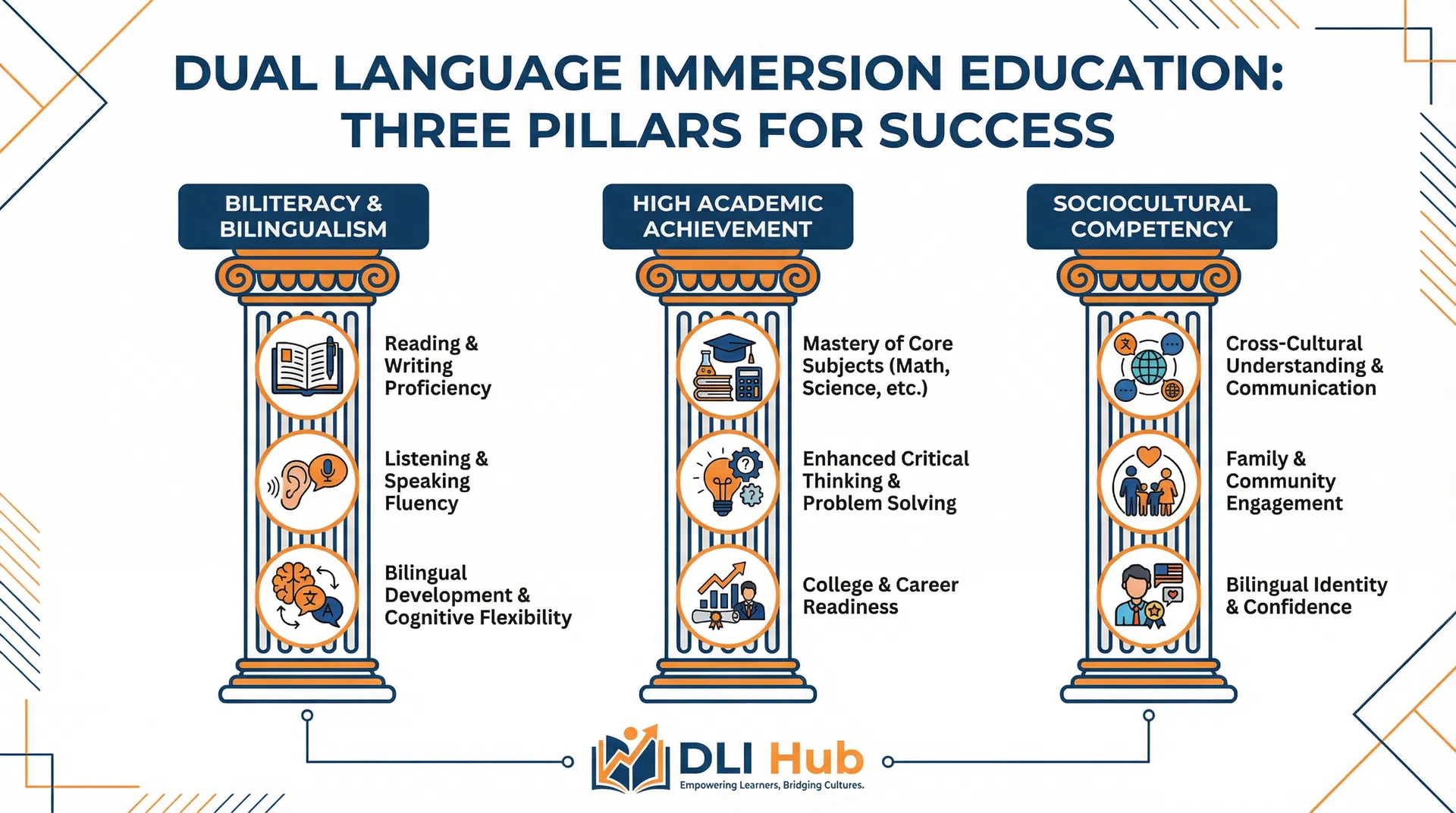
When educators and parents ask me, "Does dual language immersion really work?" I point them to decades of research. The evidence is clear: dual language immersion produces measurable benefits for bilingual proficiency, academic achievement, and cognitive development.
Bilingual Proficiency
Studies consistently show that students in well-designed DLI programs achieve high levels of proficiency in both languages. Research from the Center for Applied Linguistics found that DLI students maintain strong English development while achieving advanced proficiency in the target language. By middle school, many DLI students reach near-native levels of proficiency in both languages.
Academic Achievement
Contrary to the myth that learning in two languages slows academic progress, research shows that DLI students perform at or above grade level in academic subjects. A meta-analysis of DLI research found that students in dual language programs score as well or better than their monolingual peers on standardized tests in English, even though they spend less time in English instruction.
Cognitive Benefits
Bilingual children show advantages in executive function—the mental processes that control attention, working memory, and cognitive flexibility. These skills transfer across academic domains and contribute to better problem-solving abilities. Research also suggests that bilingualism may provide cognitive reserve, potentially offering protective benefits against age-related cognitive decline.
Long-Term Outcomes
Longitudinal studies tracking DLI students into high school and beyond show sustained benefits. These students maintain bilingual proficiency, pursue higher education at comparable or higher rates than their monolingual peers, and report greater cultural awareness and global perspective.
The Key Variables
Not all DLI programs produce equal results. Research identifies critical success factors:
- Teacher quality — Teachers must be proficient in both languages and trained in bilingual pedagogy
- Program design — Clear language allocation, consistent implementation, and adequate instructional time in both languages
- Family engagement — Parental support and understanding of bilingual development
- Program duration — Longer programs (K-12) show stronger outcomes than shorter programs
Why This Matters
The research base for DLI is robust and growing. When programs are implemented with fidelity and supported by qualified educators, dual language immersion delivers on its promise: students become bilingual, maintain strong academic achievement, and develop cognitive advantages that serve them throughout their lives.
If you're considering DLI for your school or family, the research supports your decision.