Communication with Teachers is Key: Building Strong Relationships in DLI Programs
Dual language immersion is a partnership. Your child's success depends not only on what happens in the classroom but also on the strength of the relationship and communication between families and teachers. When parents and teachers communicate openly, consistently, and respectfully, students thrive.
Why Communication Matters in DLI
DLI programs are complex. Teachers are managing instruction in two languages, differentiating for students at different proficiency levels, and integrating language development with content instruction. Parents are navigating a program model that may be different from their own educational experience. Clear, regular communication bridges this complexity and ensures everyone is working toward the same goals for the student.
Effective communication helps teachers understand:
- Your child's language background and experiences at home
- Family goals and values related to bilingual development
- Any concerns or challenges your child is experiencing
- How your family can support learning at home
Effective communication helps parents understand:
- Your child's progress in both languages
- Instructional strategies being used in the classroom
- How to support your child's learning at home
- What to expect at different stages of bilingual development
The Benefits of Strong Teacher-Family Communication
Research shows that when families and teachers communicate regularly, students experience:
- Improved academic achievement — Students whose families are engaged and communicating with teachers score higher on assessments
- Better behavior and engagement — Students are more engaged when they see their families and teachers working together
- Faster language development — Consistent messaging about language goals at home and school accelerates bilingual development
- Greater sense of belonging — Students feel more connected to school when they see their families valued as partners
- Reduced anxiety — Clear communication helps students understand expectations and feel more secure in the learning environment
How to Build Strong Communication with Your Child's Teachers
1. Establish Regular Communication Channels
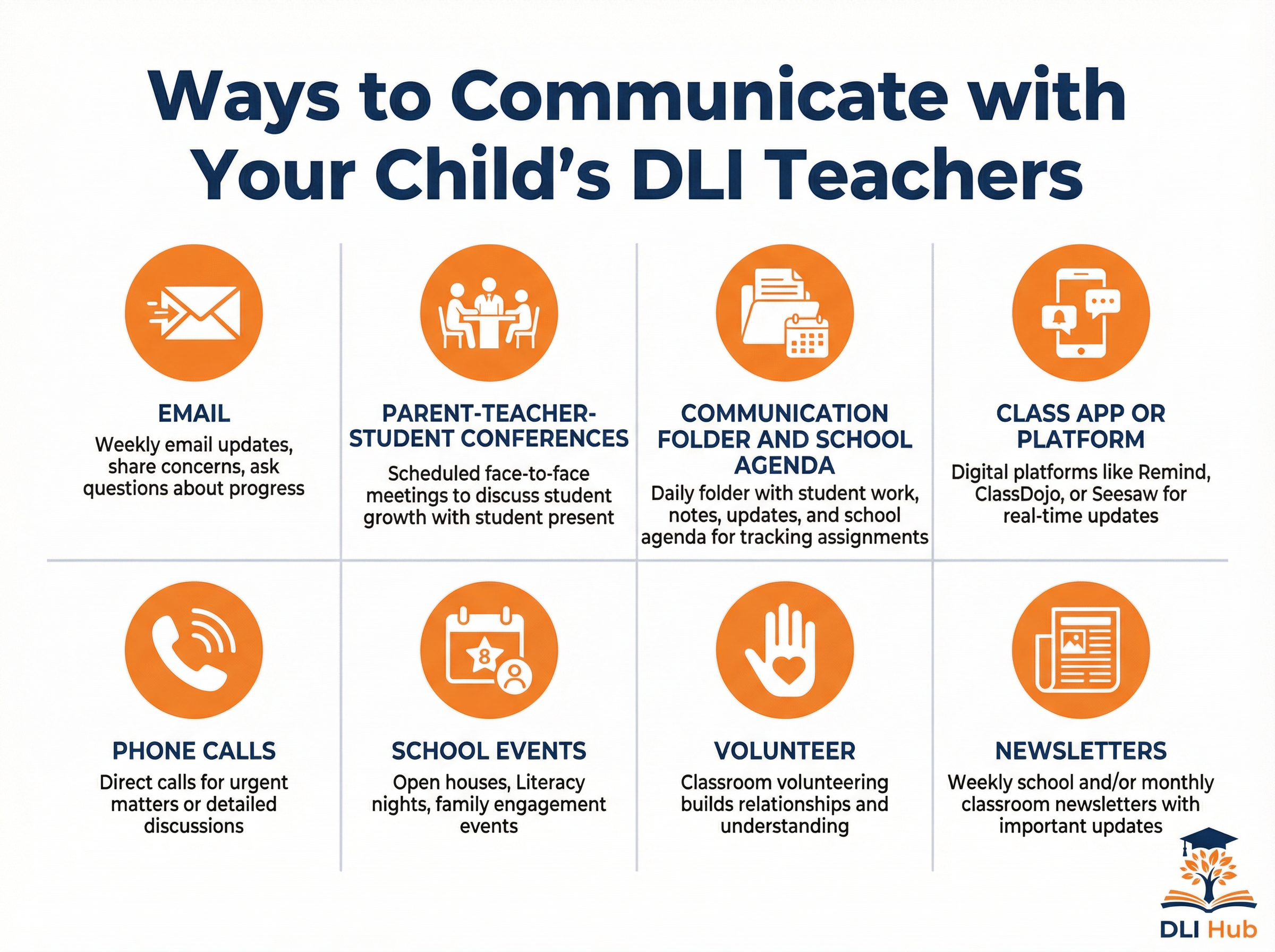
Work with your child's teacher to establish preferred methods of communication. This might include:
- Weekly emails or messages
- A communication folder or notebook
- Monthly parent-teacher check-ins
- A class communication app or platform
- Phone calls for more urgent matters
Consistency matters more than frequency. Even brief weekly check-ins are more valuable than sporadic longer conversations.
2. Share Information About Your Child
Teachers benefit from knowing about your child's:
- Language background and experiences at home
- Learning style and preferences
- Strengths and challenges
- Family interests and cultural background
- Any concerns or changes happening at home
This information helps teachers understand your child as a whole person and tailor instruction accordingly.
3. Ask Questions and Seek Clarification
Don't hesitate to ask questions about:
- Your child's progress in both languages
- Instructional strategies being used
- How to support learning at home
- What bilingual development looks like at your child's age
- How to address concerns or challenges
Teachers want to help families understand the program and support their children's success.
4. Share Positive Observations
When you notice your child learning something new, using language in new ways, or showing growth, share it with the teacher. These observations help teachers see the full picture of your child's development and reinforce positive progress.
5. Address Concerns Respectfully and Promptly
If you have concerns about your child's progress or classroom experience, communicate with the teacher promptly and respectfully. Most issues can be resolved through open, honest conversation. If concerns persist, involve the school administration.
6. Respect the Teacher's Time and Expertise
Remember that teachers are managing multiple students and families. Be respectful of their time, come prepared with specific questions or concerns, and recognize their expertise in bilingual education and child development.
Communication Dos and Don'ts
Do: - Be specific and concrete when describing concerns or observations - Ask questions from a place of genuine curiosity, not criticism - Acknowledge the teacher's efforts and expertise - Provide context about your child's home life when relevant - Follow up on previous conversations
Don't: - Use communication channels to complain or criticize - Compare your child to other students - Expect immediate responses to non-urgent messages - Assume you understand classroom dynamics without asking - Undermine the teacher's authority with your child
The Power of Partnership
When families and teachers communicate effectively, they create a powerful partnership that supports student success. Your child sees that the adults in their life are working together, sharing goals, and invested in their growth. This consistency and collaboration accelerates learning and builds your child's confidence as a bilingual learner.
DLI programs thrive when families and teachers see themselves as partners in the educational journey. Your willingness to communicate, ask questions, and work collaboratively with your child's teacher is one of the most important investments you can make in your child's success.