The Power of Parent-Teacher Conferences: Building Partnerships That Drive DLI Student Success
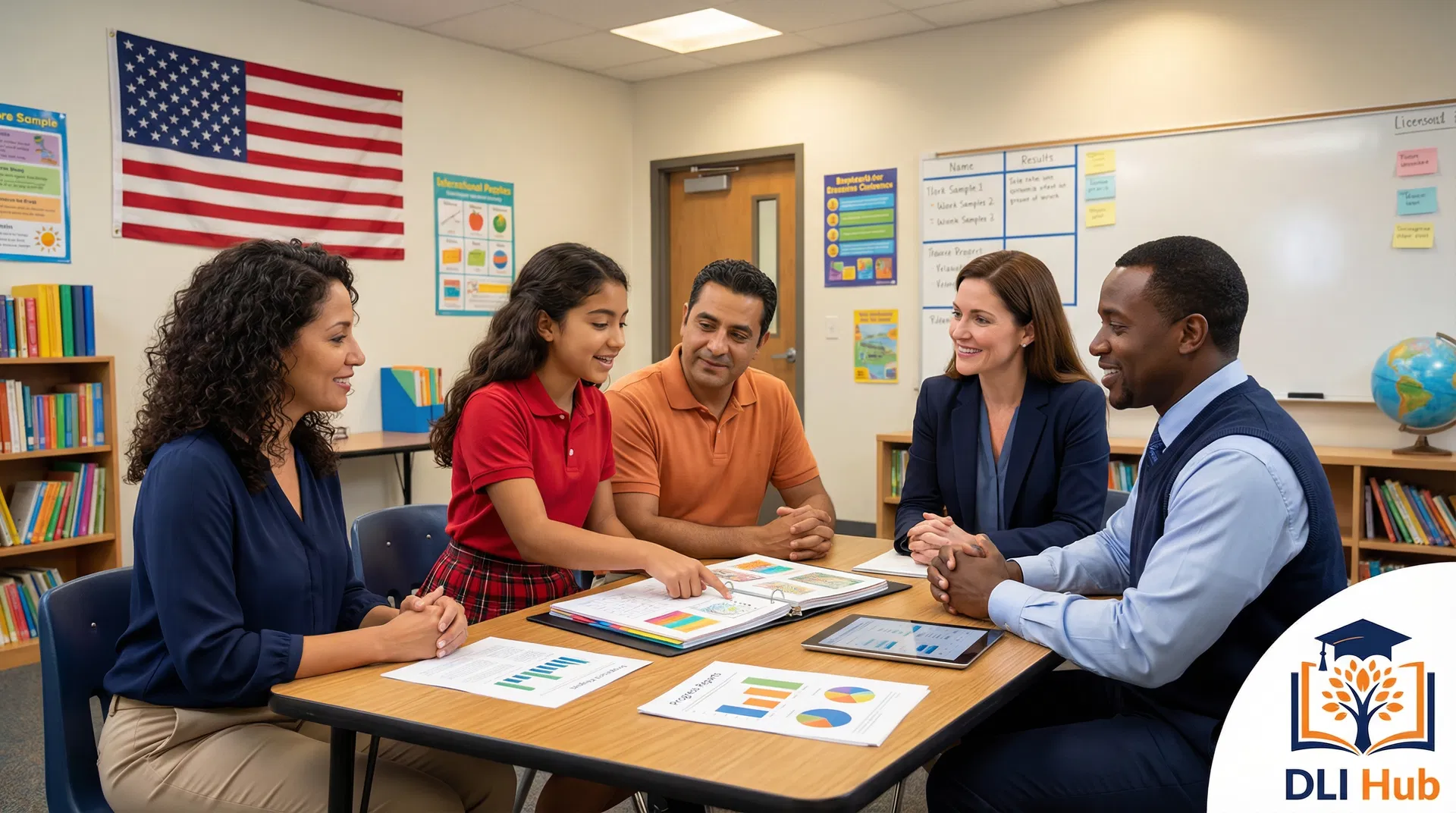
Parent-teacher conferences are more than a scheduled obligation—they are a critical opportunity to align on your child's progress, celebrate achievements, address challenges, and build a partnership that drives success. In DLI programs, these conferences take on special significance because they provide a space to discuss bilingual development, language goals, and strategies for supporting your child's growth in both languages.
Why Parent-Teacher Conferences Matter in DLI
Parent-teacher conferences serve several essential functions in DLI programs:
1. Celebrate Bilingual Progress
Conferences provide an opportunity to recognize and celebrate your child's development in both languages. Teachers can share specific examples of growth—new vocabulary your child is using, improved reading fluency, successful writing samples, or increased confidence in peer interactions. These celebrations reinforce the value of bilingualism and motivate continued effort.
2. Address Language Development Questions
Parents often have questions about bilingual development that conferences provide space to discuss:
- Is it normal for my child to code-switch?
- Why does my child seem stronger in one language than the other?
- How can I support language development at home?
- What should I expect at the next stage of bilingual development?
Teachers can provide reassurance, context, and practical strategies based on their expertise in bilingual education.
3. Align Home and School Strategies
Conferences allow families and teachers to discuss strategies for supporting your child's learning and ensure consistency between home and school. When families understand what teachers are doing in the classroom and teachers understand what's happening at home, they can reinforce each other's efforts.
4. Identify and Address Challenges
If your child is struggling academically, behaviorally, or socially, conferences provide a space to discuss concerns, identify root causes, and develop action plans. Early identification and intervention are critical, especially in DLI programs where language development and academic achievement are intertwined.
5. Set Goals and Plan Next Steps
Conferences should result in clear goals and action plans. What will your child focus on in the coming weeks or months? What strategies will teachers use? What can families do at home? Clear goals and plans ensure that everyone is working toward the same outcomes.
What Happens in a 15-20 Minute DLI Conference
DLI parent-teacher-student conferences are intentionally structured to maximize every minute. Here is what a typical 15-20 minute conference covers:
Minutes 1-3: Welcome and Student Introduction The teacher welcomes the family and invites the student to share something they are proud of—a writing sample, a project, or a reading passage in the target language. This sets a positive tone and puts the student at the center of the conversation.
Minutes 3-7: Academic Progress Review The teacher reviews your child's performance in core academic areas—reading, writing, math, and content subjects—in both languages. Teachers share specific data points such as reading levels (in English and the target language), writing rubric scores, and math benchmark results. You will see where your child stands relative to grade-level expectations in both languages.
Minutes 7-10: Language Development Update This is unique to DLI conferences. The teacher discusses your child's bilingual development, including: - Oral language proficiency in the target language - Reading fluency and comprehension in both languages - Writing development across languages - How code-switching is a normal and healthy part of bilingual development - Specific language goals for the next grading period
Minutes 10-13: Social-Emotional and Behavioral Check-In The teacher shares observations about your child's social interactions, classroom behavior, work habits, and engagement. This is also the time to discuss any concerns about peer relationships, self-regulation, or emotional well-being. The student may share their own perspective on how they feel in the classroom.
Minutes 13-16: Home-School Connection This is your opportunity to share what you observe at home—language use, homework habits, attitudes toward school, and any challenges. The teacher provides specific strategies for supporting your child at home, such as reading routines, conversation starters, or apps and resources in the target language.
Minutes 16-18: Goal Setting Together—teacher, parent, and student—you set 2-3 specific, measurable goals for the next grading period. Goals might include reading a certain number of books in the target language, improving writing organization, or increasing participation in class discussions. The student writes down their goals and commits to working toward them.
Minutes 18-20: Questions and Next Steps The teacher opens the floor for any remaining questions. You discuss follow-up plans—when and how you will check in on progress, what resources are available, and any referrals or additional support your child might need.
This structured approach ensures that every conference is productive, focused, and student-centered. Both teachers and families leave with clear action items and a shared commitment to the child's success.
Preparing for a Productive Conference
Before the Conference:
- **Review your child's work** — Look at recent assignments, tests, and projects to understand what your child is learning and where they might need support
- **Reflect on your observations** — Think about what you've noticed about your child's learning, behavior, and social interactions at home
- **Prepare questions** — Write down specific questions about your child's progress, bilingual development, or classroom experience
- **Identify concerns** — If you have concerns, think about how to express them clearly and specifically
- **Bring your child** — Consider bringing your child to the conference so they can hear feedback, participate in goal-setting, and take ownership of their learning
During the Conference:
- **Start with strengths** — Begin by discussing your child's strengths, achievements, and positive qualities
- **Listen actively** — Give the teacher time to share observations and insights about your child
- **Ask clarifying questions** — If you don't understand something, ask for clarification or examples
- **Share information** — Tell the teacher about your child's experiences at home, interests, and any factors that might affect school performance
- **Discuss strategies** — Work together to identify strategies for supporting your child's growth
- **Involve your child** — If your child is present, ask for their input and encourage them to set goals
- **Take notes** — Write down key points, goals, and action items so you remember what was discussed
After the Conference:
- **Follow up on action items** — Implement the strategies discussed and follow up with the teacher on progress
- **Communicate with your child** — Share what was discussed and help your child understand the goals and expectations
- **Maintain momentum** — Use the conference as a starting point for ongoing communication and collaboration
Making Conferences Student-Centered
One of the most powerful approaches to parent-teacher conferences is making them student-centered. When students participate in their own conferences, they:
- Take ownership of their learning
- Understand their progress and areas for growth
- Develop goal-setting and self-reflection skills
- See their families and teachers as partners in their success
- Feel heard and valued
Student-led conferences might include:
- Your child sharing work samples and explaining their learning
- Your child discussing their strengths and challenges
- Your child setting goals for the coming weeks
- Your child explaining how they're progressing toward previous goals
- Your child asking the teacher and parents for support
Addressing Concerns Constructively
If you have concerns about your child's progress or classroom experience, approach the conference as a problem-solving opportunity:
- **Be specific** — Describe exactly what you've observed, not generalizations
- **Ask for the teacher's perspective** — Teachers may have different observations or context you're not aware of
- **Collaborate on solutions** — Work together to identify strategies for addressing the concern
- **Establish a timeline** — Agree on when you'll check in again to see if the strategies are working
- **Remain respectful** — Assume good intentions and approach the conversation as partners, not adversaries
The Long-Term Impact
Parent-teacher conferences that are collaborative, student-centered, and focused on partnership create powerful momentum for student success. When students see their families and teachers working together, celebrating their achievements, and supporting their growth, they develop confidence, resilience, and a growth mindset.
In DLI programs, these conferences are particularly important because they provide space to celebrate and support bilingual development—a unique and valuable achievement that deserves recognition and intentional support.